
You Made a Mistake. Here’s How to Take Your Power Back. 💛
Nov 04, 2026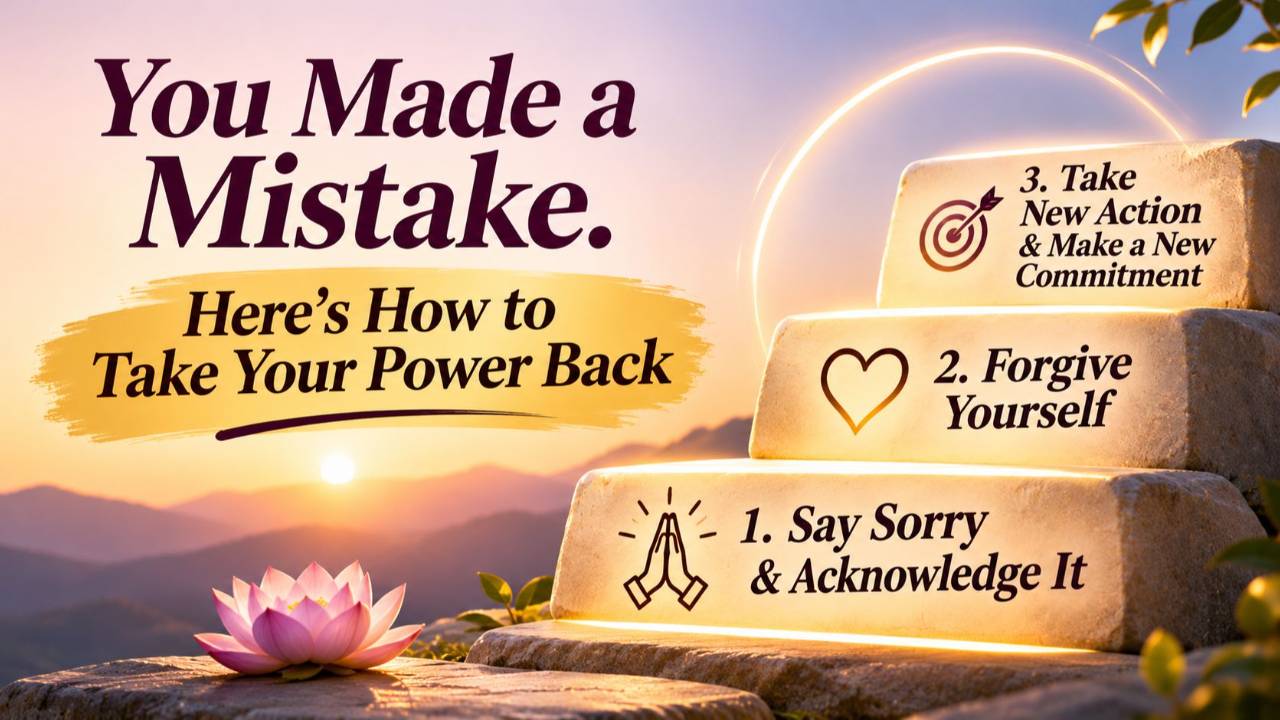
You don’t have to be perfect to live with integrity. You need to acknowledge your mistakes, forgive yourself, and make a new commitment through action.
Have you ever promised yourself that you would do something, only to break that promise?
Maybe you decided to wake up early but kept hitting snooze.
Maybe you promised yourself you would stop overthinking a situation, but found yourself repeating the same thoughts.
Perhaps you told someone you would do something and didn't follow through.
And then comes the familiar cycle:
You feel disappointed. You blame yourself. You replay the mistake in your mind. You start questioning your ability to keep your own word.
One broken commitment becomes a reason to doubt yourself.
But what if the real problem isn't that you made a mistake?
What if the bigger problem is that you never gave yourself a way to recover from it?
In one of our Daily Magic Practice sessions, we explored a simple framework for dealing with mistakes: reintegrate yourself instead of remaining stuck in guilt.
Let's understand how this works. ✨
1. Integration: The Power of Keeping Your Word 💪
During the session, we explored the concept of integration through a simple physical demonstration.
Make a fist and repeat:
"When I am integrated, I am powerful."
Now open your fist and repeat:
"When I am disintegrated, I am powerless."
The idea is simple.
Integration means being honest, authentic, telling the truth, keeping your commitments, and keeping your word.
When your thoughts, words, and actions are aligned, you begin to build trust in yourself.
But when you repeatedly break your commitments, you create a gap between what you say and what you actually do.
Think about these examples:
-
You say you want to become healthier, but repeatedly ignore the small habits you've committed to.
-
You say you want to build a successful career, but avoid taking the actions you know are necessary.
-
You promise yourself that you will set boundaries, but continue saying yes when you want to say no.
The issue isn't that you're incapable of change.
It's that your commitments and actions aren't moving in the same direction.
And this is where reintegration becomes important.
2. You Will Make Mistakes. Learn How to Reintegrate. 🌱
One of the most important reminders from the session was this:
You are human. You will make mistakes. You may break commitments. You may disintegrate. But you can also reintegrate.
Instead of expecting yourself to be perfect every single day, learn how to take responsibility and move forward when you fall short.
There are three steps you can practise whenever you break a commitment.
3. The 3-Step Reintegration Practice
Step 1: Say, "I'm Sorry. I Made a Mistake."
The first step is to acknowledge what happened.
Not explain it away.
Not blame someone else.
Not create a list of reasons why it happened.
Simply recognise your part in it.
Say:
"I'm sorry. I made a mistake."
If you broke a commitment to yourself, acknowledge that.
If you hurt someone, acknowledge that too.
Avoiding the mistake doesn't make it disappear. It can keep you trapped in guilt, regret, fear, and self-doubt.
Taking responsibility gives you a starting point.
You cannot change what you refuse to acknowledge.
Step 2: Forgive Yourself. ❤️
After acknowledging the mistake, the next step is self-forgiveness.
This is where many people struggle.
They know they made a mistake, but they keep punishing themselves for it.
They replay the situation repeatedly, wondering why they behaved that way or why they couldn't keep their promise.
But guilt alone doesn't repair anything.
You can take responsibility without treating yourself as someone who is beyond forgiveness.
Say:
"I forgive myself."
This doesn't mean pretending the mistake never happened. It doesn't mean avoiding consequences or expecting other people to forgive you immediately.
It means choosing not to remain trapped in self-blame.
You can learn from what happened without carrying it as your identity.
You can accept that you made a mistake without deciding that you are a mistake.
Step 3: Take New Action. Make a New Commitment. ⚡
This is the step that turns an apology into meaningful change.
Imagine ordering something online and receiving the wrong product.
The company says sorry. But is an apology enough?
Usually, you would also expect a solution: an exchange, a refund, or another meaningful action.
The same principle applies to your commitments.
If you tell yourself, "I'm sorry I didn't follow through," what are you going to do differently now?
If you promised to wake up early but didn't, what is your new commitment?
If you avoided an important conversation, what action will you take to address it?
If you broke a promise to someone, what can you do to make things right?
Say:
"I take a new action. I make a new commitment."
Because real change isn't just about saying the right words. It's about following those words with action.
4. Your Affirmations Need Your Actions Too. 💫
Think about the affirmations you repeat every morning.
"I'm confident."
"I'm disciplined."
"I'm successful."
"I keep my commitments."
These words can remind you of the person you want to become.
But ask yourself one important question:
Are your everyday actions supporting the words you repeat?
If you affirm that you are disciplined but repeatedly abandon the commitments you make to yourself, there's an opportunity to bring your actions back into alignment.
You don't need to make ten new promises tomorrow.
Start with one.
Choose one small commitment that you can realistically honour.
It could be:
-
Going for a 10-minute walk.
-
Completing one important task.
-
Being honest about how you feel.
-
Showing up on time.
-
Spending five minutes on a goal you've been postponing.
Keep that commitment.
And if you make a mistake, return to the three steps:
-
Acknowledge it.
-
Forgive yourself.
-
Take new action.
Over time, these small moments of follow-through can help you rebuild self-trust.
5. Try This Tonight: Your Reintegration Exercise 📝
Before going to sleep, take a few minutes to reflect.
Choose one area of your life where you feel you've broken a commitment, either to yourself or to someone else.
Then ask yourself:
1. What commitment did I break?
Be honest about what happened.
2. Can I acknowledge my mistake without making excuses?
Take responsibility for your part.
3. Am I willing to forgive myself?
Choose to learn rather than continue punishing yourself.
4. What new action can I take?
Identify one practical step that can help you make things right.
5. What commitment am I willing to keep from today onward?
Make it realistic and specific.
Write down your answers.
Don't turn this into another exercise where you judge yourself.
The purpose is to recognise where you are, take responsibility, and decide what you will do next.
Remember: You don't need to spend the rest of your life regretting one mistake.
You need to learn from it and take the next step.
6. Your Power Is in What You Do Next. 🌟
You cannot always control whether you make a mistake.
But you can choose how you respond to it.
You can stay stuck in guilt, or you can acknowledge what happened and begin again.
You can keep repeating promises, or you can start making commitments that your actions support.
And perhaps the most important thing is this:
Don't let one broken commitment become a reason to break your trust in yourself permanently.
Say you're sorry.
Forgive yourself.
Take new action.
That's how you begin to reintegrate.
Your words become more meaningful when you make a genuine effort to live by them.
You don't need to be perfect. You need to be willing to take responsibility, learn, and realign your actions with your intentions.
🌈 Make Daily Magic Practice Part of Your Life
Want to build a daily practice that helps you become more intentional about your thoughts, emotions, and actions?
Join our FREE 30 Days of Daily Magic Practice (DMP).
Start building the habit of showing up for yourself, one day at a time.
👉 Join here: https://coaching.miteshkhatri.com/30-days-dmp-free-affiliate?el=MKSubDMP04112026
💬 One Question for You
What's one commitment you want to make again today, and what's the first action you'll take to honour it?
Share your answer in the comments. Your commitment might inspire someone else to begin again, too. ❤️
